
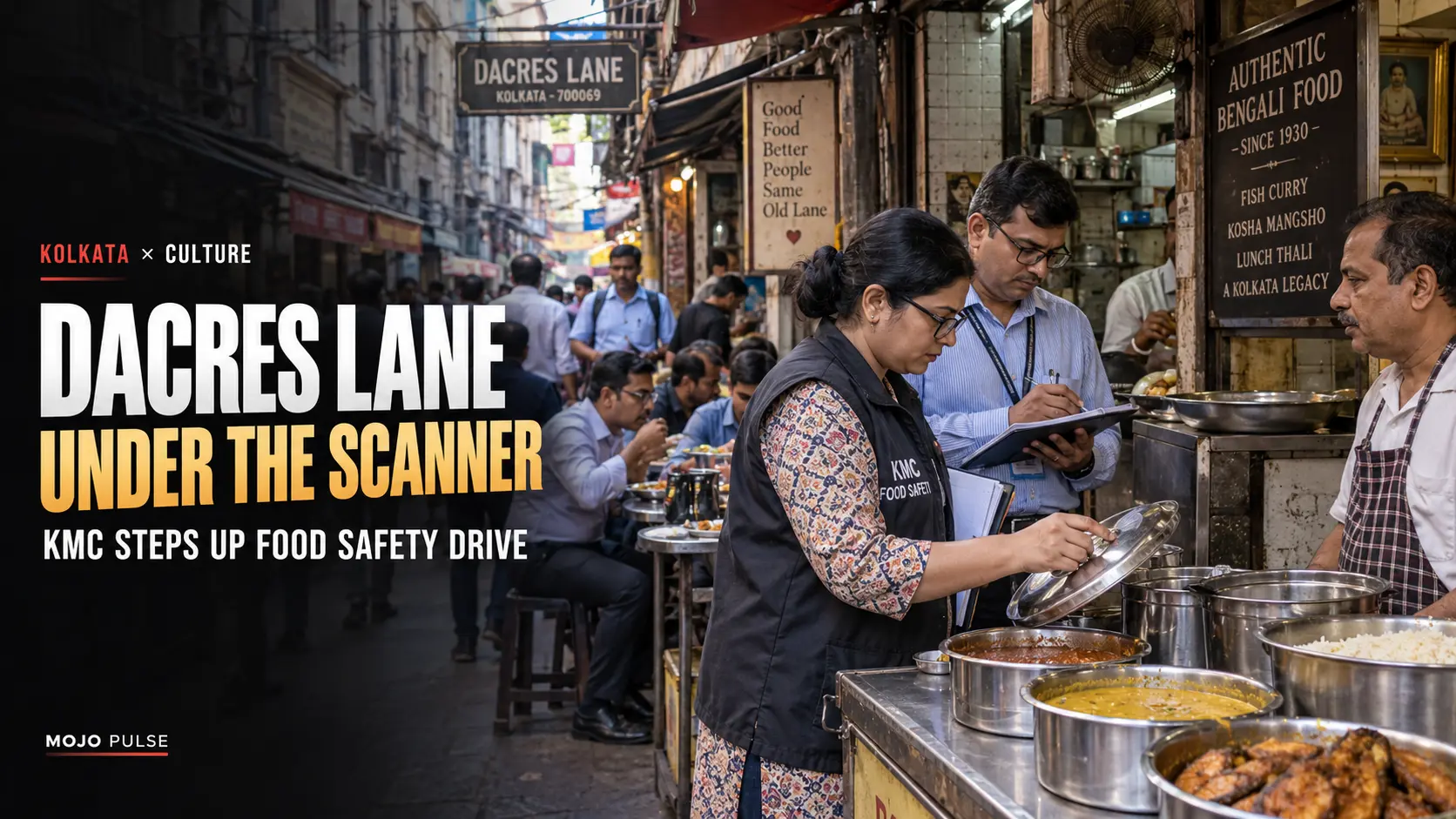
KMC Cracks Down on Dacres Lane Eateries as Kolkata Steps Up Food Safety Drive
From uncovered sweets and missing food labels to kitchen inspections and discarded food, Kolkata Municipal Corporation officials have turned their attention to one of the city’s most iconic food destinations. But for Dacres Lane, the larger question is whether Kolkata can preserve its old-school food culture while bringing hygiene standards up to modern expectations.
For generations of Kolkatans, Dacres Lane has never needed an introduction.
Tucked into the heart of central Kolkata’s office district, the narrow food street has built its reputation not through polished interiors or elaborate restaurant experiences, but through something far more enduring: affordable food, familiar flavours and decades of loyalty.
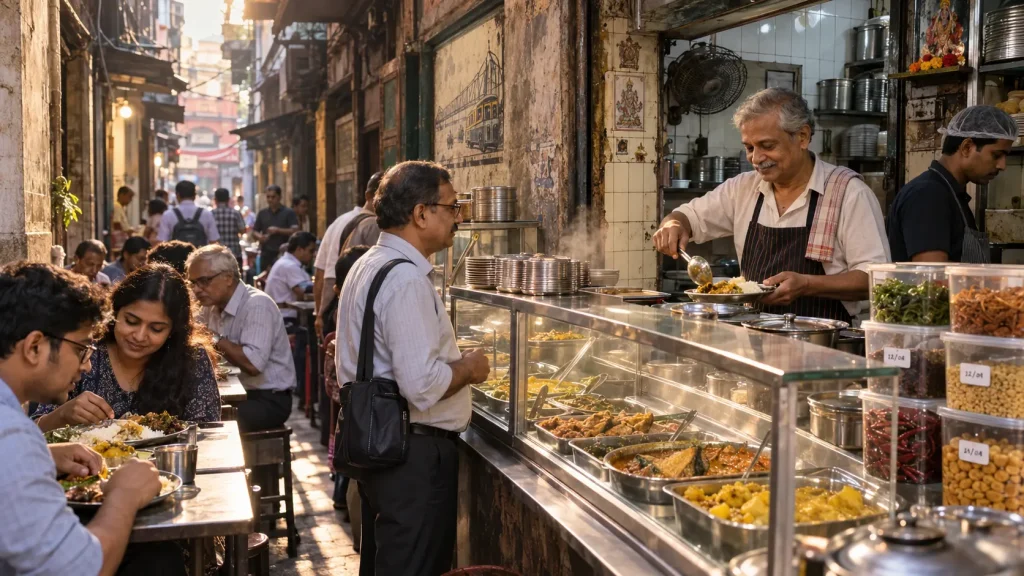
Office-goers, students, food enthusiasts and generations of regular customers have made their way here for everything from fish fry and cutlets to chicken stew, ghugni, luchi, rice meals and sweets.
But this week, attention shifted from what was being served to how it was being stored, prepared and handled.
As part of a wider food-safety drive, officials from the Kolkata Municipal Corporation (KMC) inspected several eateries at Dacres Lane, checking kitchens, ingredients, food storage and hygiene practices.
And inspectors reportedly found areas of concern.
What Happened at Dacres Lane?
According to reporting by The Times of India, KMC food-safety officials inspected several established eateries at Dacres Lane as part of a wider food-safety drive. KMC food-safety officials visited Dacres Lane on Saturday, September 5, as part of a special food-safety inspection drive being conducted across West Bengal.
Several established eateries came under inspection, including Apanjan, Sharma Sweets, New Chittaranjan—popularly associated with Chitto-da—and Suruchi, along with other eateries and pice hotels operating in the area.
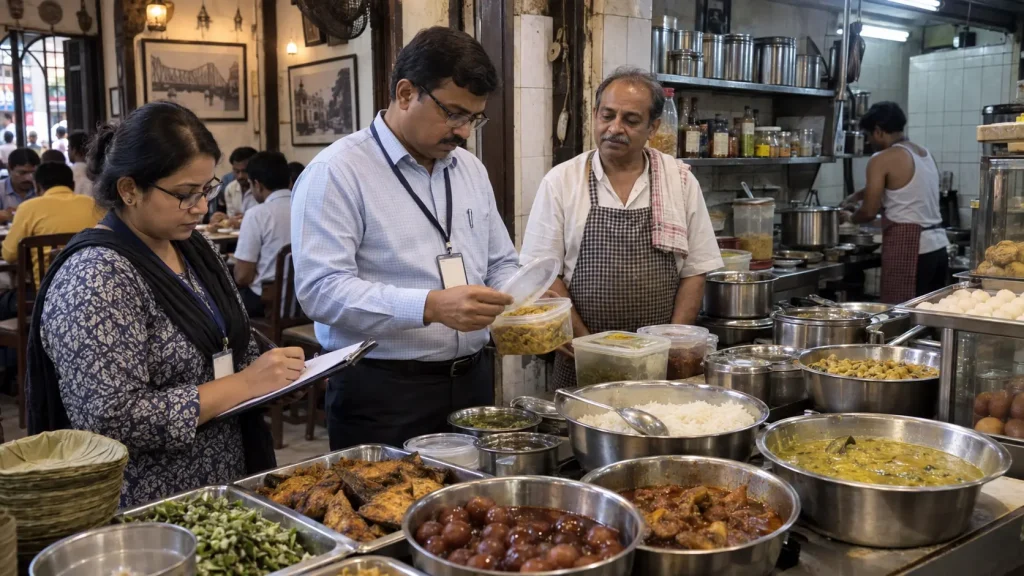
Officials examined kitchens, prepared food, cooking ingredients and storage practices.
The inspections did not produce identical findings at every establishment, making it important not to treat the entire food street as a single case.
Different eateries were reportedly flagged for different issues.
Uncovered Sweets Come Under the Scanner
One of the more significant interventions reportedly took place at Sharma Sweets.
Officials found sweets being kept uncovered and exposed to flies, following which almost the entire available stock was reportedly destroyed.
The establishment was also instructed not to use colour in its sweets.
For consumers, something as seemingly basic as whether food is covered can make a substantial difference to hygiene.
For traditional establishments accustomed to open displays and fast-moving counter service, however, such inspections also highlight how everyday operating practices may need to evolve.
Prepared Food and Labelling Become Another Focus
At Apanjan, inspectors reportedly identified a different issue.
Prepared food was found without the required information indicating when it had been prepared and its appropriate “use by” period.
A bucket containing boiled rice was reportedly discarded during the inspection.
The proprietor subsequently indicated that the establishment would follow the labelling requirements.
The episode highlights a part of food safety consumers don’t necessarily see.
Hygiene isn’t only about whether a kitchen appears clean.
Traceability, storage, preparation time and knowing how long cooked food has been held are also part of modern food-safety practices.
For smaller and older eateries, adopting these systems can require a change in everyday operations.
New Chittaranjan’s Kitchen Also Inspected
Officials also inspected New Chittaranjan, checking its kitchen, cooking oil and food.
According to the establishment’s manager, no notice was served following the inspection, while the business was advised to comply with applicable FSSAI guidelines.
That distinction matters.
A food-safety inspection does not automatically mean every establishment inspected has committed the same violation—or any violation at all.
The exercise is also about identifying practices that need improvement and bringing establishments into greater compliance.
Food samples are reportedly being collected in cases where officers suspect possible safety issues, allowing them to be sent for further testing.
This Isn’t Just About Dacres Lane
The inspections form part of a broader food-safety initiative rather than an isolated crackdown on one Kolkata food destination.
Food-safety inspections have also been conducted in areas including Lake Market, Jorabagan and Dum Dum.
That suggests authorities are taking a wider look at how food is prepared, stored and sold across different parts of the city.
And the approach isn’t limited to enforcement.
KMC has also been associated with plans for hygiene training for street-food vendors, with Dacres Lane among the locations identified for such initiatives.
The restaurant industry is responding as well, with food-safety training for restaurant personnel becoming part of the wider conversation around improving standards.
The larger objective should therefore be more than catching violations.
It should be about changing practices.
Mojo Pulse Take
Dacres Lane’s Heritage Shouldn’t Become an Excuse for Poor Hygiene
There is something deeply nostalgic about Kolkata’s old eateries.
The worn counters.
The enormous cooking vessels.
The handwritten menus.
The crowded lunch hours.
The dishes that have barely changed in decades.
That character is precisely why places such as Dacres Lane continue to matter.
But nostalgia cannot become a substitute for food safety.
An establishment being 30, 50 or even 70 years old doesn’t mean every operating practice from decades ago should remain unchanged.
Food culture survives because recipes and traditions endure.
Unsafe practices don’t need to.
That distinction is important.
Can Kolkata Modernise Its Street Food Without Sanitising Its Character?
This is where the Dacres Lane story becomes more interesting.
There is a danger when cities modernise historic food districts that everything begins to look the same.
Steel counters replace old wooden stalls.
Standardised signage replaces hand-painted boards.
Traditional establishments begin resembling food-court outlets.
Eventually, the character that made the destination special can disappear.
That shouldn’t be the objective here.
Food-safety compliance doesn’t require Dacres Lane to stop being Dacres Lane.
A century-old recipe can remain unchanged while ingredients are stored more safely.
A traditional sweet shop can retain its character while protecting food from flies.
A pice hotel can continue serving familiar Bengali meals while implementing clearer systems for cooked-food storage and preparation times.
Heritage and hygiene are not opposing ideas.
The Social Media Era Has Changed the Stakes
There is another reason this conversation matters today.
Kolkata’s iconic food destinations no longer serve only local customers.
Instagram, YouTube, food bloggers, travel creators and digital publications have transformed neighbourhood eateries into destinations capable of reaching audiences across India and beyond.
A single Reel about an old Kolkata food stall can attract hundreds of thousands—or even millions—of views.
That visibility creates opportunity.
But it also creates scrutiny.
The same smartphone camera that can make a plate of chicken stew go viral can also capture an unhygienic kitchen, uncovered food or questionable storage practices.
For heritage food businesses, reputation is increasingly being built and challenged in public.
Food Safety Is Now Part of Brand Reputation
Many of Dacres Lane’s establishments may not think of themselves as “brands” in the modern marketing sense.
But they are.
They have names people recognise.
They have loyal customers.
They have signature products.
They generate word of mouth.
They appear in videos, articles and social media posts.
And some carry decades of goodwill.
That is brand equity.
Food-safety failures can damage that equity surprisingly quickly.
For an old establishment, therefore, improving hygiene isn’t merely about satisfying inspectors.
It’s reputation management.
Regular Customers Still Matter
One of the most interesting aspects of the response surrounding the inspections has been the loyalty of Dacres Lane’s long-time customers.
For people who have eaten at these establishments for decades, their relationship with the food is built on personal experience.
That loyalty shouldn’t be dismissed.
But neither should it prevent scrutiny.
In fact, customers who genuinely care about these establishments should have the greatest interest in seeing them improve.
Regular inspections and better hygiene standards can ultimately help protect the very businesses people want to preserve.
A Bigger Opportunity for Kolkata
Kolkata possesses something many cities spend enormous amounts of money trying to manufacture: authentic food culture.
Dacres Lane is part of it.
So are the city’s cabins, pice hotels, sweet shops, tea stalls, roll counters and generations-old restaurants.
These aren’t simply places where people eat.
They are part of Kolkata’s identity.
That makes preserving them important.
But preservation cannot mean freezing them in time.
If better food storage, cleaner kitchens, clearer labelling, safer ingredients and improved training can coexist with traditional recipes and old-school hospitality, Kolkata’s heritage food ecosystem becomes stronger—not weaker.
Mojo Pulse Insight
The KMC drive at Dacres Lane should not ultimately be judged by how much food was discarded or how many establishments were inspected.
The more meaningful measure will be what changes after the inspectors leave.
If businesses temporarily clean up before returning to old practices, little has been achieved.
But if inspections are followed by education, training, infrastructure improvements and sustained compliance, the impact could extend far beyond Dacres Lane.
Kolkata doesn’t need to choose between its food heritage and modern hygiene standards.
It needs both.
Because the best way to protect an iconic food destination isn’t simply to preserve how it used to operate.
It’s to make sure people can continue eating there confidently for another generation.



Reader discussion
Join the conversation respectfully. Your email address will not be published. Comments are reviewed before appearing.